
Log Home Financing Information
Financing from log home construction to a log home mortgage is not so hard. Log home financing is very similar to financing a framed home, and the overall process is familiar to most banks and lenders. The key is understanding how construction loans work, planning ahead, and most importantly designing your log home around a realistic budget.
Similar to framed homes
Budget-first focus
23 years experience
* Disclaimer: This guide is for educational purposes and does not constitute financial advice.
How Log Home Construction Loans Work
01
Construction Phase
A short-term (9-18 mo) loan used for the build phase. Interest rates are usually a bit higher than a mortgage, but your payment is smaller because you are typically only paying interest on the amount drawn during the build.
02
Convert to Mortgage
After construction—most commonly around 12 months—the loan converts into a conventional mortgage, such as a 15, 20, or 30-year loan.
03
Refinance Later
Once the home is finished, refinancing is usually much easier, especially if interest rates improve. At that point, you often have significantly more equity in the home as well.
Bank-Ready Checklist
Before you walk into a bank, ensure you have these five critical items gathered.
Property Location
Proof of land ownership or a signed purchase contract for the lot.
Final Floor Plans
Detailed blueprints that will be used for the appraisal process.
Signed Sales Agreement
Your agreement with Lazarus for the log home package materials.
Builder's Bid
A firm estimate from a licensed contractor for the full construction cost.
Build Timeline
A projected schedule showing when draws will be needed for funding.
What to Know Before You Talk to a Bank
Below are some important things to remember, watch for, and shop for when arranging log home financing.
We've found that those who design their log home around their budget will succeed.
When a project begins with a clearly defined budget, the path to creating a dream home becomes far more successful. The most rewarding builds happen when vision and budget are aligned from the start. By designing with financial parameters in mind, homeowners are able to make confident decisions, avoid costly surprises, and bring their dream home to life.
Appraisers often struggle to find recent comparable log homes, especially new ones. They may rely on:
- Cost basis
- Property value
- Older or framed homes used as comps
The good news: we’ll help you put together what your lender typically needs—your plans, bid, and turnkey estimate—so you can keep the process moving forward.
What to do if a bank says "No"
01
Ask Why Specifically
Was it the appraisal? Your debt-to-income ratio? The property type? Knowing exactly why allows you to pivot.02
Try a Different Lender Type
Many of our customers were denied by one bank, then went to another, refined their proposal, and eventually succeeded—sometimes on the third or fourth try.03
Re-evaluate the Project Scope
The biggest challenge is rarely the log home plan itself. It's getting the financing structured to fit the budget and the plan. Those who design around the budget have a best chance for success.Where to start your lender search?
Not all banks or mortgage companies offer construction loans. If you don't own your property free and clear but have cash available, you'll need to find a lender that offers the right construction loan product.
The Local Community Bank
Often your best bet. Local banks understand the regional real estate market and are more flexible with "unique" properties like log homes. They hold their own loans and make their own rules.
Regional Specialists
Some large regional banks have dedicated "Construction to Permanent" departments. They have efficient processes but may have stricter appraisal requirements for log homes.
When calling a bank, lead with this question:
“Do you offer a construction loan, if so, what are the terms?”
Equity loans—where you already own property or borrow against an existing home—are often easier to obtain, and many banks do offer these, especially when the debt-to-equity ratio is favorable.
Contractors, Estimates & Staying Proactive
As financing moves forward, don't wait until the last minute to line up help. Sometimes it means:
Calling friends or family with construction experience
Getting multiple bids from contractors or subs
Not stopping after one high estimate that deflates your hopes
Stay engaged, make multiple calls, and build a realistic picture of costs. This effort pays off.
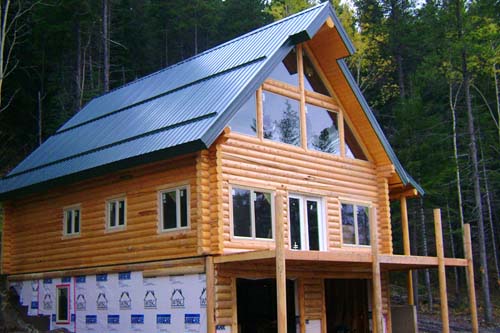
Success Story
Lazarus helped us navigate the bank requirements by providing professional drawings that our loan officer actually understood. We closed on our construction loan in 6 weeks.
The Smith Family
Montana Build 2023
Mini Case Study
Project Type:
2,400 sq.ft. Chalet
Lender:
Regional Credit Union
Down Payment:
15% Cash + 10% Land Equity
Approval Time:
48 Days